
Temporomandibular Joint Dysfunction
Temporomandibular joint dysfunction (TMD) refers to abnormal mechanics of your jaw
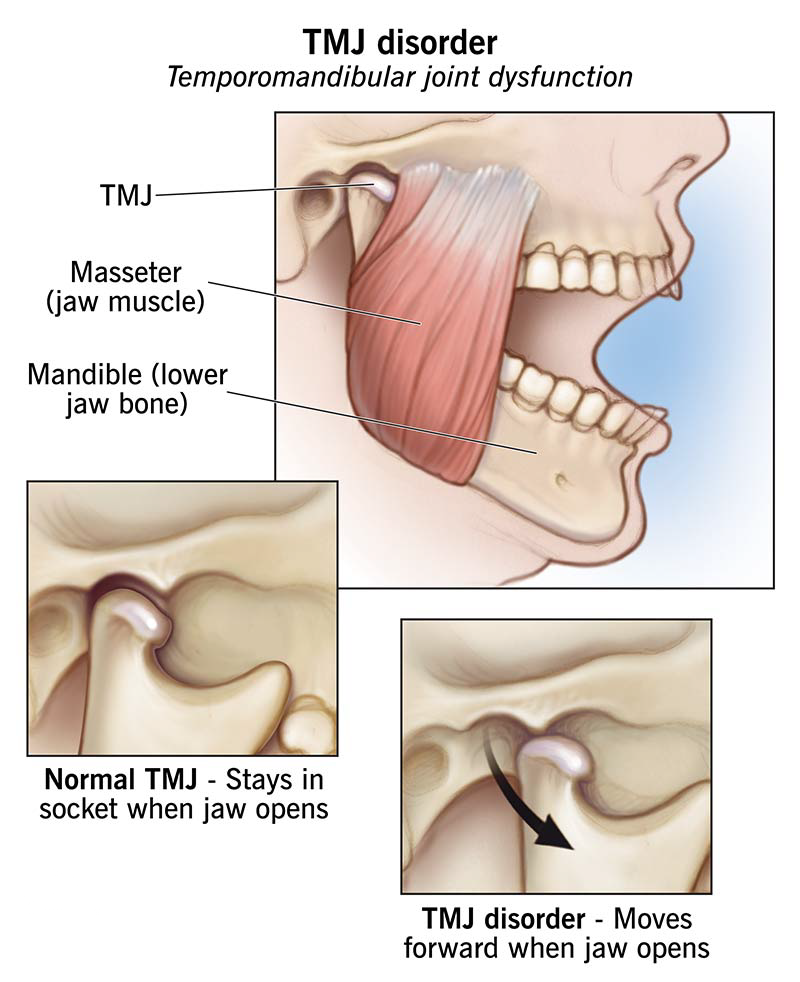
In normal jaw movement, the temporomandibular joint (TMJ) works like a “sliding hinge”, where the “ball” rotates, slides forward and side-to-side within the “socket”, allowing your jaw to open and close
In abnormal jaw movement, the TMJ loses this ability to work as a sliding hinge. Instead of remaining within the “socket”, the “ball” may “dislocate” out of the “socket”.
This “dislocation” can cause the “ball” to move onto other tissue, leading to pain, clicking, popping, headaches, difficulty chewing, or even locked-jaw.
Common causes of TMD include bruxism (grinding teeth), stress, arthritis, and jaw injury
Over time, TMD can manifest as jaw pain, as muscles nearby become tight and tender, and the joint itself becomes inflamed with repeated, improper mechanics
What Treatments Can Help My TMD?
Chiropractic Care
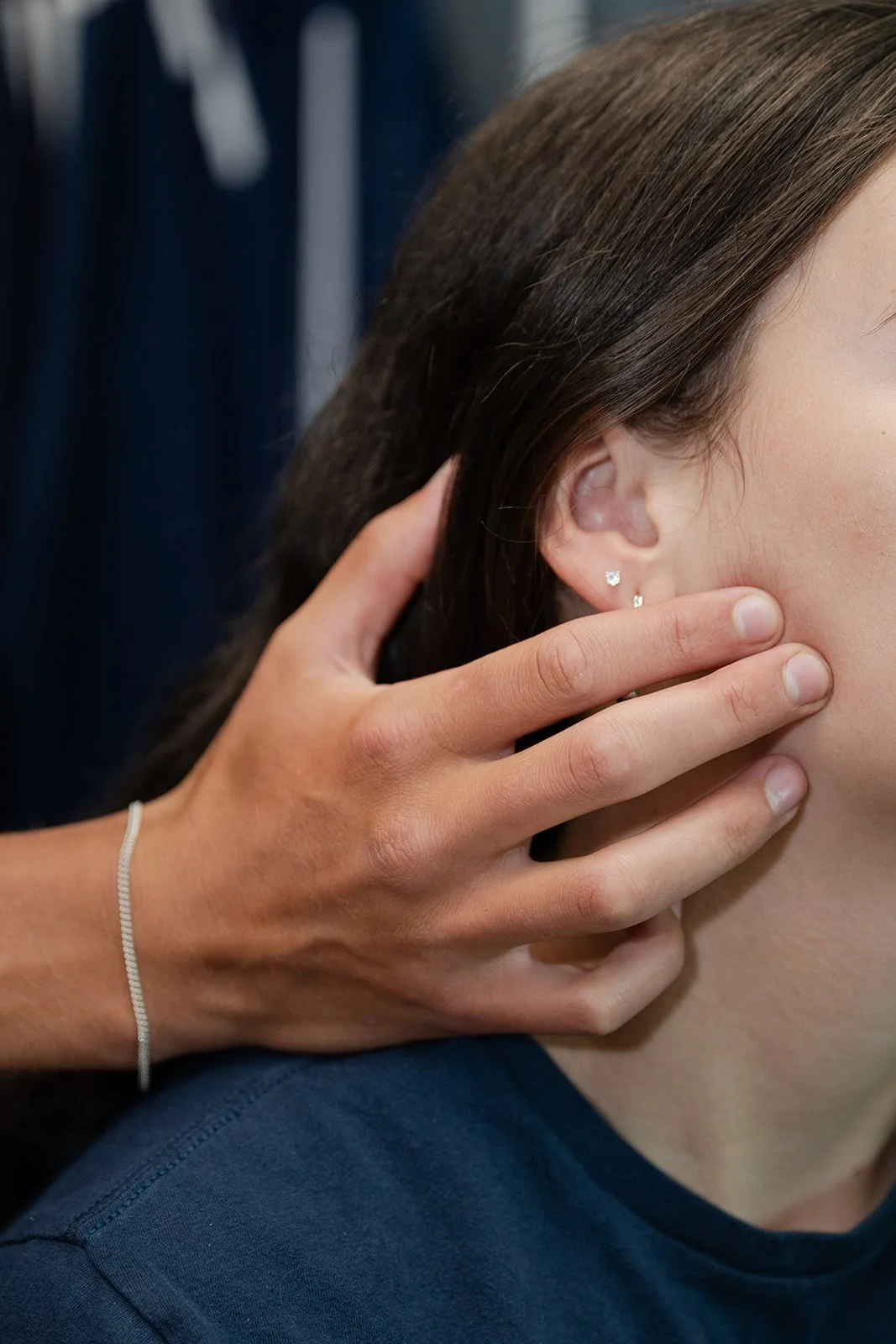
Relieve TMD-related jaw pain through soft tissue therapy
Regain normal range of motion with gentle joint mobilisations
Regain normal jaw mechanics with biomechanical retraining
Massage Therapy
Assist with your recovery by relieving muscle tension and stiffness through soft tissue work.